Retail shrinkage has been a persistent challenge that directly impacts profitability. According to the National Retail Federation, the average number of shoplifting incidents increased by 18% from 2023 to 2024, and this figure is expected to climb even higher in the coming years. Uncontrolled shoplifting and unidentified losses have driven retailers to establish dedicated loss prevention (LP) teams to protect margins. However, in fast-paced, high-traffic store environments, maintaining continuous visibility relies heavily on sustained human attention, especially as self-checkout lanes now account for a significant portion of transactions. These new checkout processes, paired with outdated surveillance systems, place unprecedented stress and heavy workloads on LP teams, making it imperative that they change the way they work and adopt new technologies.
The Current State of Loss Prevention and the Technology Gap
LP teams serve as the frontline defense against shrinkage. Unlike security guards, LP professionals receive specialized training in investigative techniques and surveillance analytics, including gesture recognition and behavioral tracking. They operate with a narrower but deeper mandate: proactively preventing and identifying any potential or unknown losses before they impact the bottom line.
For most LP teams, the goal is not only to stop shoplifting in progress but to uncover the root causes of unknown losses. They spend considerable time reviewing CCTV footage, transaction logs, and exception reports to identify where and how losses occur. These human-led analytics require significant time and effort. More challenging still, identifying unknown losses can be nearly impossible with human eyes alone. Collectively, these factors make loss prevention a slow, reactive process that struggles to keep pace with the ever-evolving retail environment and increasingly sophisticated theft tactics.
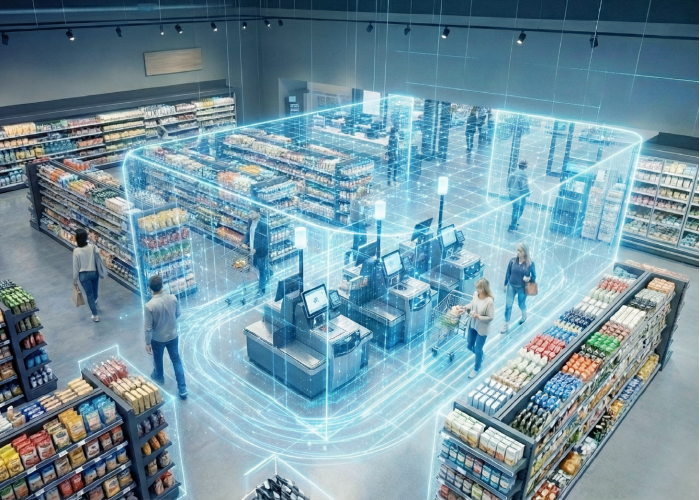
The bottleneck has intensified even further as self-checkout adoption has surged. What was once a convenience feature has become a standard expectation, with some retailers operating stores that are predominantly or entirely self-service. Standard CCTV cameras provide reactive, not proactive, security. The ratio of cameras to monitors is overwhelming, with a single LP staff member responsible for monitoring dozens of checkout stations across multiple screens. During peak hours especially, the cognitive load becomes impossible to manage, and thieves exploit this vulnerability.
Redefining Loss Prevention with Vision AI
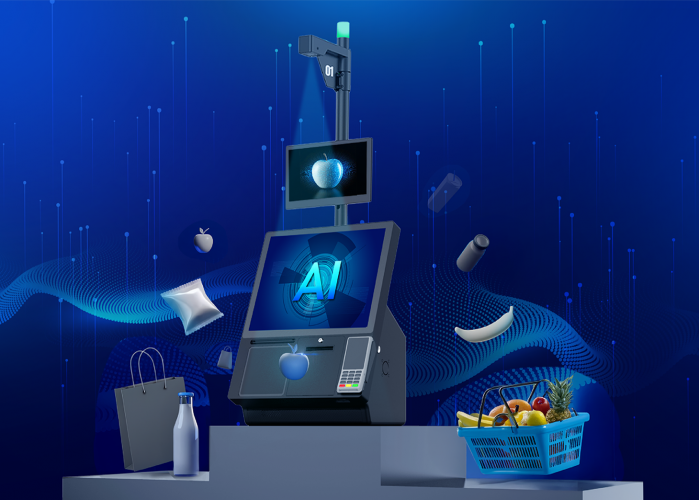
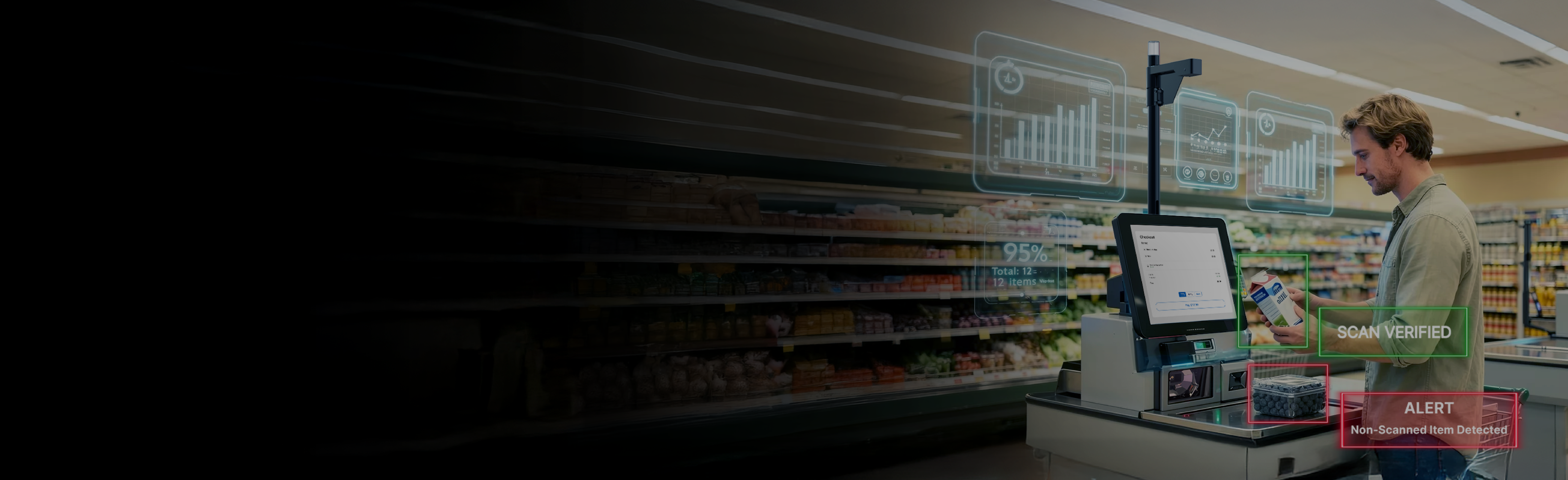
To address these challenges, AI technology is being leveraged to overcome the limitations of manual monitoring. Unlike traditional surveillance that simply records events, Vision AI in self-checkout actively monitors, interprets, and alerts in real time. These systems use computer vision to recognize specific behaviors and scenarios that indicate potential theft or error. Such behaviors include items placed in bags without being scanned, obscured or manipulated barcodes, items passed around the scanner, and suspiciously rapid transaction times for high-value products.
This transformation for LP teams is substantial. Instead of attempting the impossible task of watching multiple video feeds simultaneously, AI serves as an intelligent first-stage filter to identify the most critical incidents and send alerts only when detecting genuinely suspicious activity. LP teams can intervene in real time with a polite interaction at the station, often preventing the loss before the transaction completes. Most importantly, the deterrent effect is powerful. When customers realize that AI is monitoring transactions in real time, the calculus of attempting theft changes dramatically.
Beyond real-time alerts, these systems capture complete self-checkout actions and data for LP professionals to analyze. This serves as a dedicated, valuable database to understand fraudulent behaviors across different retail environments, providing insightful information for LP teams to uncover the root causes of unknown losses. With more advanced AI capabilities, systems can combine vision data with Generative AI functions to provide descriptive insights, making it much easier to obtain actionable results to combat retail shrinkage.
No Rip-and-Replace Required: A Smarter Path to AI Integration
The value proposition of Vision AI for self-checkout is clear. Reports show that more than 56% of retailers indicate increasing budgets for both hardware and software aimed at reducing theft and fraud. While fully integrated AI-powered self-checkout systems may appear to be the most straightforward path forward, they raise a critical question that keeps retail executives up at night: How can this technology be adopted without abandoning millions of dollars invested in existing checkout infrastructure?
This concern is well founded. Self-checkout kiosks represent significant capital investments, and many retailers continue to operate fully functional systems installed within the past few years. Replacing this infrastructure solely to add AI capabilities creates a costly contradiction, requiring substantial new spending to prevent losses while margins are already under pressure from the very shrinkage retailers are trying to control.
Fortunately, retailers now have a more pragmatic alternative through edge computing architecture, specifically box PCs with integrated AI processing capabilities. These compact, purpose-built devices are deployed alongside existing kiosks rather than replacing them. They connect directly to cameras and self-checkout systems, processing video feeds locally using onboard AI accelerators. As next-generation AI capabilities emerge, upgrading a box PC costs only a fraction of replacing entire checkout stations, allowing the infrastructure to evolve with technology rather than become obsolete.
The retail loss prevention landscape is changing rapidly. The tools and approaches that worked when checkout was entirely cashier-operated are insufficient for today's self-service reality. Vision AI represents not just an incremental improvement but a fundamental reimagining of how loss prevention operates in modern stores.
Ready to protect your bottom line while future-proofing your checkout infrastructure? Connect with our team to discover how Vision AI can transform your loss prevention strategy without the infrastructure overhaul you're dreading.