As we look toward 2026, retail and hospitality leaders are increasingly moving beyond isolated hardware decisions to architect seamless, end-to-end customer journeys.
Payment now plays a pivotal role in that experience. It has evolved from a transactional necessity into a key touchpoint for brand engagement. However, one size rarely fits all. After all, what works for a mobile server in a busy restaurant is ill-suited for a standalone kiosk, driving the need for a more adaptive approach.
This is the essence of the Hybrid Payment Blueprint. It allows businesses to balance the agility of SoftPOS with the stability of embedded payment modules. Here is why this dual strategy could be the key to success for 2026 and beyond.
SoftPOS: Unlocking Agility and Engagement
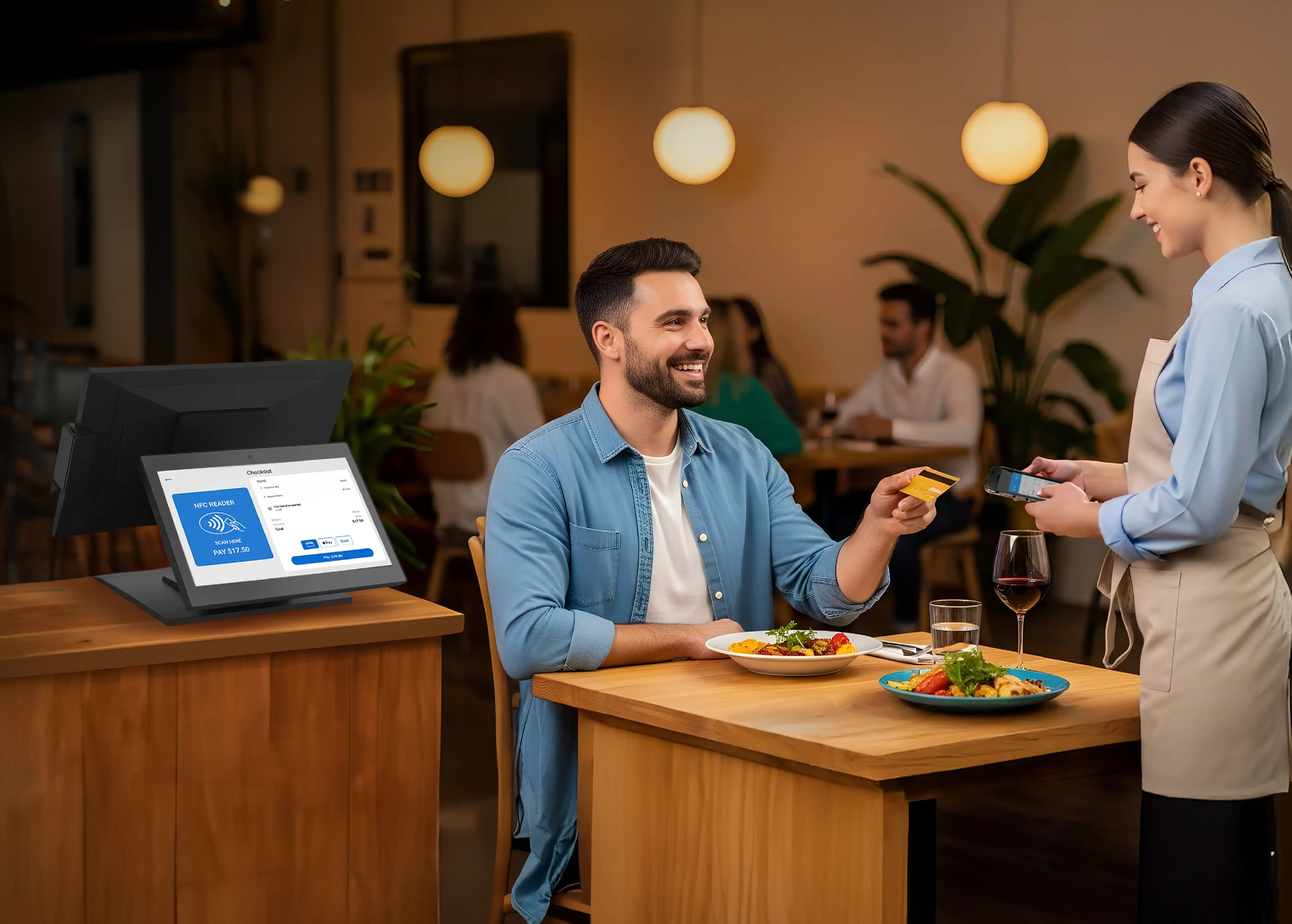
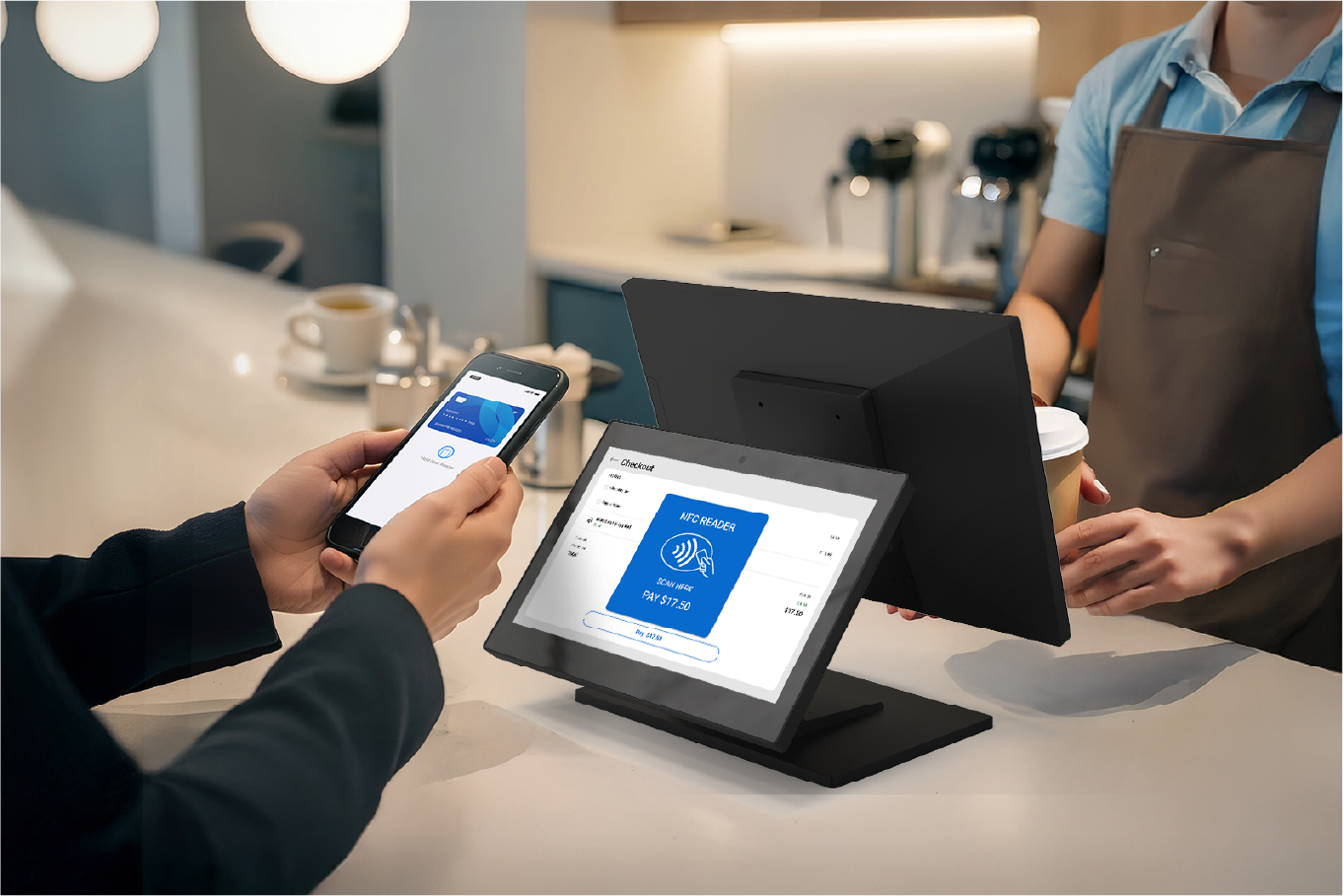
SoftPOS (Software Point of Sale) is changing how we think about transactions. By turning a GMS-certified Android device into a payment terminal using NFC, we essentially make the payment hardware invisible, removing the physical barrier between staff and customers.
From an operational perspective, SoftPOS shines by transforming the entire floor plan into a dynamic point of sale:
• Line-Busting (Queue Management): During peak hours or holiday seasons, a long queue is often a barrier to purchase. SoftPOS allows staff to step out from behind fixed counters and turn any spot on the floor into a checkout lane. This not only rescues potential lost sales but significantly reduces customer wait times, turning a frustration point into a service opportunity.
• Seamless Table-Side Service: In hospitality, the goal is uninterrupted service. SoftPOS allows servers to use a single, sleek device for taking orders, checking loyalty points, and accepting payments right at the table. This streamlines the workflow, eliminating the trips back and forth to a stationary terminal, and allows staff to focus entirely on the guest experience.
For 2026, we are integrating these capabilities directly into our hardware platforms. By eliminating the need for bulky external dongles or sleds, we create a more ergonomic tool for daily use, effectively lowering the Total Cost of Ownership (TCO) while maximizing mobility.
Embedded Payment Modules: The Foundation of Scale and Security
While SoftPOS provides exceptional agility at the edge of service, relying solely on contactless payments can limit operational scope. High-volume commerce and complex retail environments require dedicated infrastructure that can handle any payment scenario with absolute reliability.
This is where embedded payment modules serve as the unshakeable core of the ecosystem:
• Performance at Scale: In a bustling supermarket lane or a busy quick-service restaurant, every second impacts the bottom line. Embedded modules offer dedicated processing power engineered specifically for transaction velocity. This ensures consistent, split-second card reading even during peak rush hours, keeping lines moving efficiently when customer patience is at its lowest
• Universal Acceptance: Consumer habits vary widely across demographics and regions. A significant portion of global consumers still prefer or rely on inserting chip cards or swiping magnetic stripes. Integrating an embedded module guarantees true payment inclusivity, ensuring a business never misses a sale simply because the hardware lacks the necessary physical interface.
• Unattended Resilience: For self-service kiosks that operate 24/7 without staff supervision, security goes far beyond software encryption. These environments demand physical ruggedness. A PCI-PTS certified module provides essential anti-tamper mechanisms and durability, safeguarding the hardware against vandalism, fraud, and harsh usage in public spaces.
The Engineering Reality: Why GMS Certification Matters
For ISVs and retail IT directors, the most significant barrier to scaling is rarely the initial hardware performance. While processing power and screen quality grab headlines, the true friction lies in the operational lifecycle. The challenge is not just deploying a device, but sustaining a consistent and manageable fleet across hundreds of locations for years rather than months.
The reliance on consumer-grade mobile devices introduces the hidden tax of rapid obsolescence. When a standard smartphone reaches its End of Life due to frequent consumer model changes, it forces businesses into a costly and disruptive cycle. IT teams are compelled to constantly re-certify software for new models and manage a fragmented fleet of devices, draining resources that should be focused on innovation.
To break this costly cycle, we counteract hardware volatility by pairing the longevity of industrial engineering with the seamless versatility of a modern software ecosystem.
• A Deployment-Ready Ecosystem: Our strategic Android portfolio is fully GMS (Google Mobile Services) certified. This is more than just a technical badge. It is a critical operational bridge. It grants direct access to the Google Play Store for frictionless application management and ensures that every device receives timely security patches directly from the source. This compliance effectively eliminates the significant security risks and administrative overhead associated with sideloading apps on non-certified hardware.
• Long-Term Industrial Roadmap: Unlike consumer electronics that are designed for rapid obsolescence, our hardware is engineered for operational continuity. We offer extended lifecycle support, guaranteeing that the device configuration you certify today is the exact same unit you can procure years from now. This supply chain stability drastically reduces the complexity of Mobile Device Management (MDM), allowing IT teams to maintain a unified, predictable infrastructure across hundreds of locations without the disruption of constant model changes.
Design Philosophy: One Design, Two Paths
In 2026, we are evolving our product strategy to establish a truly cohesive ecosystem. We are extending the Hybrid Blueprint across our entire payment portfolio, spanning the full spectrum from agile mobile handhelds and robust countertop POS systems to next-generation self-service kiosks. This shift ensures that the same versatile design logic applies universally, effectively erasing the traditional engineering boundaries between fixed, mobile, and unattended checkpoints.
We recognized that large enterprises often struggle with a difficult operational trade-off. They require specific tools for different roles but dread the logistical nightmare of managing a fragmented fleet of disparate devices. Our answer is a Unified Modular Architecture. This approach uses a versatile core platform that adapts to the specific needs of the environment through smart configurability.
• Path A is the SoftPOS Configuration: Designed for maximum agility and minimalism. For handhelds, this offers an ultra-slim profile for mobile staff. For desktop POS and Kiosks, it enables a clean, clutter-free design without the need for external pin-pads. Specifically for Kiosks, this allows for a sleek, continuous glass surface where the screen itself becomes the terminal, offering a seamless customer experience. It prioritizes ergonomics and aesthetics to remove the physical hardware barrier between the brand and the consumer.
• Path B is the Embedded Payment Module Configuration: The same core device seamlessly integrates with a professional payment module. This transforms the unit into a robust transaction powerhouse for environments that demand physical card interfaces and strict security compliance. It delivers the ruggedness and read-rate reliability of a traditional terminal without sacrificing the intuitive user interface of a modern touchscreen device.
The strategic advantage of this design lies in unification. Whether deploying a Kiosk with SoftPOS or a high-volume POS with an Embedded Payment Module, IT teams manage one common technical architecture. This dramatically simplifies supply chain management, reduces staff training time, and ensures a consistent brand experience across every touchpoint in the store.
Building the Foundation for Unified Commerce
The payment landscape of 2026 will not be defined by a single rigid technology but by the intelligent orchestration of choices. It is about having the fluidity to meet the customer wherever they are, whether that is in the aisle, at the table, or at the traditional counter.
Leading retailers and hospitality providers require the freedom to pivot instantly. They need to deploy SoftPOS for seamless engagement during peak hours and rely on Embedded Modules for high-volume throughput when speed is paramount. Crucially, these distinct needs must be anchored within a single, secure hardware ecosystem to ensure operational consistency and minimize total cost of ownership.
At Flytech, we specialize in engineering the robust physical infrastructure that makes this flexibility possible. We do not just build terminals. We build platforms that empower innovation.
• For ISVs: We provide a stable, globally certified foundation to scale your software without boundaries.
• For Brands: We offer the architectural certainty needed to modernize the customer journey without risk.
The Hybrid Payment Blueprint represents more than just a strategy—it is a commitment to your long-term agility. As the landscape evolves, the future of payments belongs to the adaptable.